
Contents
- 1 Discover the Exciting Rules of the Summoner Wars Game!
- 1.1 The Basics: What You Need to Know
- 1.2 Setting Up the Battlefield
- 1.3 The Art of Battle
- 1.4 Victory or Defeat
- 1.5 Are You Ready for the Challenge?
- 1.6 Phase 2: Summon
- 1.7 Now It’s Time to Play Some Event Cards
- 1.8 Time to Get Moving
- 1.9 Phase 5: Engage in Battle
- 1.10 Now, let’s talk about Phase 6. It’s called Build Magic, and it’s pretty epic.
- 1.11 Oh, and I almost forgot – let’s talk Special Abilities for a moment.
- 1.12 Victory at Hand
Discover the Exciting Rules of the Summoner Wars Game!
Have you ever played the thrilling game of Summoner Wars? If not, get ready to dive into a world of strategy, tactics, and epic battles! In this article, I will guide you through the essential rules of this exciting game.
The Basics: What You Need to Know
First things first, let’s understand the fundamentals. In Summoner Wars, you take on the role of a summoner, a powerful being capable of commanding various factions to battle against your opponents. Your goal is to defeat the enemy summoner by strategically positioning your units and using clever tactics.
Each player starts with a deck of cards that represents one of the game’s factions. These cards include units, events, and walls that you can use to protect your summoner and attack your enemy. But remember, every decision you make will have consequences, so choose wisely!
Setting Up the Battlefield
Before the battle begins, you and your opponent need to set up the battlefield. This is done by placing your walls at your summoner’s starting location and building the necessary terrain. The battlefield is made up of a grid of spaces, and you and your opponent will take turns placing units on these spaces.
Once the battlefield is ready, it’s time to start summoning your units and using special event cards to gain an advantage. You can place units adjacent to your summoner or any existing unit you control. Choose your placement carefully, as unit positioning plays a crucial role in your success.
The Art of Battle
Now that you have set up your forces, it’s time to engage in epic battles! Each turn, you can move your units and attack your opponent’s forces. Different units have unique abilities and attack values, so use them wisely to overcome your enemy.
As you progress in the game, your summoner gains magic points that you can use for various actions, such as summoning more units or casting powerful spells. Managing your magic points strategically is key to victory!
Victory or Defeat
The battle continues until one summoner is defeated. This happens when the enemy summoner’s health is reduced to zero. But don’t worry if you lose, because the game is full of surprises, and with each battle, you will learn new strategies and tactics to become a better summoner!
Are You Ready for the Challenge?
Now that you know the basic rules, it’s time for you to dive into the world of Summoner Wars and unleash your strategic skills! Gather your faction’s cards, set up the battlefield, and embark on an adventure filled with excitement and thrilling battles.

In Summoner Wars, I become a Summoner, given the power by a Summoning Stone to summon mighty warriors and cast powerful spells. This is my tool for battling against another Summoner. The goal of the game is simple – destroy my opponent’s Summoner card. When I’m the only one left with my Summoner card in play, victory is mine.
Let’s talk about the different components of the game. We have a rulebook to guide us, a battlefield board to set the stage, and five six-sided dice and twenty wound markers to keep track of the action. And of course, there are 225 cards to play with.
The unit cards are crucial in the game. They represent the different forces, known as units, that form our army. From the powerful Summoner to the humble Scout, every unit is represented by a unit card.
Now, let’s take a closer look at the anatomy of a unit card.

1 Attack Value: When you attack with a Unit, you get to roll a certain number of dice, and that number is based on the Unit’s Attack Value.
2 Summon Cost: This is how many Magic Points you need to spend in order to bring the Unit onto the Battlefield.
3 Special Ability: Each Unit may have its own set of unique rules and abilities.

When it comes to Range Symbol, certain Unit Cards are equipped with a bow symbol, which allows them to launch long-range attacks. These cards can target enemies that are up to 3 spaces away in a straight line. On the other hand, Unit Cards with a sword symbol can only attack adjacent cards, requiring them to be right beside their targets.
Now, let’s talk about Unit Names. Among the various Unit Cards, Champions and Summoners possess unique names such as Lun or Krusk. On the other hand, Common Units have more generic names like Shaman or Warrior. It’s worth mentioning that certain Special Abilities and Event Cards may refer to specific Units by their names.
Furthermore, we have Unit Types. These Unit Cards fall into three distinct categories: Summoners, Champions, and Commons. In the game, you will come across rules, Special Abilities, and Event Cards that specifically mention or target particular types of Unit Cards.
In this game, you start with a total of 7 Life Points. See those colored dots? Each one represents 1 Life Point. The more dots you have, the more Life Points you have.
When you attack, you roll the dice. For every successful hit, you put a Wound Marker on the Unit Card you’re attacking. Remember, each Wound Marker represents damage.
Units have Life Points too. If a Unit has a number of Wound Markers on it equal to or greater than its Life Points, it gets destroyed. It can no longer be used in the game.
Now, let’s talk about Character Art. See those cool pictures on the cards? They don’t affect how the game is played. They’re just there to make the cards look nice. So, enjoy the art!
Event Cards

Event Cards are pretty cool. They’re like special cards that do special things in the game. You can use them to cast spells or rally your troops.
Event Cards are made up of two parts: the card’s name and what it does in the game. Pretty simple, right? And the best part is, you can play them during your turn in the Play Event Cards Phase.
But wait, there’s more!

A Wall Card is like a special kind of Event Card, but with a twist.
Unlike other cards, Wall Cards don’t have a fancy name or a cool ability written on them. Instead, they simply show a picture of a wall and have a number of Life Points.
Walls aren’t like regular Units, but they can still be attacked and destroyed just like them. However, Walls aren’t affected by Abilities or powers that only work on Units.
When it’s time to play an Event Card, you can easily place a Wall Card on any empty spot on your side of the Battlefield.
So, why do you want to have Walls on your side? Well, Walls serve 2 important purposes.
First, they provide protection for your Units. They act as a shield, giving your Units something to hide behind. They can also block your opponent’s movement, making it harder for them to attack you.
Second, Walls can act as a summoning point for your Units. When you want to bring new Units into the game, you have to place them next to a Wall Card that you control. It’s like a magical gateway for your Units to enter the battlefield.
However, keep in mind that Walls can also be attacked and destroyed, just like Units. So, be cautious! If you lose control of all your Walls, you won’t be able to summon any more Units to help you in the game.
Vine Walls
I have always been enchanted by the beauty of vine-covered walls. There is something captivating about the way the vines gracefully climb and intertwine, creating a living tapestry that adds character to any structure.
When you see a vine-covered wall, it’s hard not to be drawn in by its charm. The vibrant green leaves and delicate tendrils create a sense of whimsy and wonder. It’s as if the wall itself has come alive, breathing life into the architecture.
But vine walls are more than just aesthetically pleasing; they also serve a practical purpose. The dense foliage acts as a natural insulator, helping to regulate temperature and reduce energy consumption. In the summer, the vines provide shade and cool the air around them, while in the winter they act as a barrier against heat loss.
Another benefit of vine walls is their ability to improve air quality. As the vines photosynthesize, they absorb carbon dioxide and release oxygen, helping to purify the surrounding air. This can have a positive impact on both human health and the environment.
In addition to their environmental benefits, vine walls also offer a sense of privacy and security. The dense foliage acts as a natural barrier, creating a secluded space that is shielded from prying eyes. This can be particularly appealing in urban areas where privacy is often hard to come by.
Maintaining a vine wall does require some effort, but the rewards are well worth it. Regular pruning and training are necessary to ensure that the vines grow in the desired direction and don’t become overgrown or tangled. It’s important to choose the right type of vine for your specific needs, as some varieties are more suited to certain climates and conditions.
So, if you’re looking to add a touch of beauty, functionality, and enchantment to your home or garden, why not consider a vine-covered wall? With their natural charm and myriad benefits, vine walls are sure to elevate any space and leave a lasting impression on all who encounter them.

The Swamp Orcs have this unique type of wall they call a Vine Wall. It’s a special kind of wall that they use in their battles. On the back of each Vine Wall card, you’ll find the basic rules for Vine Walls printed. These rules explain how Vine Walls work and what their abilities are.
Here are the full rules for Vine Walls. I’ll skip over the parts that are not important right now, so it’s easier to understand.
First of all, Vine Wall cards are not shuffled into your deck like other cards. Instead, if you have Vine Walls listed on your Summoner’s Reference Card, you start the game with a certain number of Vine Wall cards in a separate pile called the Vine Wall Pile.
Whenever a card tells you to place a Vine Wall, you take a Vine Wall card from your Vine Wall Pile and place it where instructed. Vine Walls are considered to be Wall cards, but there are a few things that make them different:
1. Life: Each Vine Wall has 2 Life Points. This means that you need to deal 2 damage to destroy a Vine Wall.
And that’s it! These are the rules for Vine Walls. They add an extra layer of strategy to your battles and can help protect your units. Just remember that Vine Walls have 2 Life Points, so you’ll need to deal enough damage to destroy them.
Attacking: When it comes to attacking a Vine Wall, you have the option to attack either the Unit or the Wall itself. But first, you must declare your target. Even if there’s a Unit on the Vine Wall space, you can still attack it. Just keep in mind that the Vine Wall acts like a normal Wall, blocking line of sight. This remains true even if a Unit is on top of it.
Some Special Abilities, like Blerg’s Adapt Ability, refer to cards underneath them that have a unique impact. However, Vine Walls are not considered cards underneath those Units when interpreting these rules.
Don’t forget that a Unit on a Vine Wall space is considered adjacent to the Vine Wall, even though they are sharing a space.
Battlefield
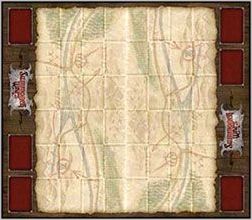
The place where all the action happens is called the Battlefield. It’s split into two halves, separating your side from your opponent’s side. The Battlefield is made up of small spaces, like the size of cards. These spaces help measure distance and where you can place your cards.
On both ends of the Battlefield, there are three special areas for the cards you’ll use during the game: the Draw Pile, the Magic Pile, and the Discard Pile.
Now, let’s talk about how to set things up.
1. First, unfold the Battlefield and place it on a flat surface between the players. Make sure the card piles are facing the players.
2. Next, take out the dice and Wound Markers. Put them to the side of the Battlefield in separate piles. Everyone should be able to reach them easily.
3. Now, it’s time to choose your card deck. Each player picks a deck with its own color and symbol. These show which cards belong to each deck.
When playing Summoner Wars, the first thing we do is roll a die to determine who goes first. The player with the highest roll gets to choose who takes the first turn. If there’s a tie, we re-roll. The player who goes first in the game skips the first three phases of the Turn Sequence and starts with the Movement Phase. However, during this first Movement Phase, the player can only move up to 2 Units instead of the usual 3. After that, they can continue their turn as normal.
Now, let’s talk about the Game Turn. A Game Turn in Summoner Wars is made up of 6 phases, and they must be played in order. Here are the phases:
1. Draw: In this phase, we draw cards from our deck to add to our hand.
2. Summon: During the Summon phase, we can bring new Units into play by paying their summoning cost.
3. Play Event Cards: In this phase, we can play Event Cards from our hand to gain advantages or disrupt our opponent’s strategy.
4. Movement: The Movement phase is when we can move our Units across the board, positioning them strategically.
5. Attack: In the Attack phase, we can choose to attack our opponent’s Units or their Summoner, dealing damage and trying to eliminate them.
6. Build Magic: The last phase is the Build Magic phase, where we gain Magic Points that we can use for summoning Units and playing Event Cards.
After going through all 6 phases, it becomes our opponent’s turn to play. And that’s how the turn structure works in Summoner Wars.
When you start your turn, make sure you have 5 cards in your hand. If you don’t have enough, draw cards until you reach the desired number. For example, if you only have 3 cards, draw 2 more to complete your hand.
There’s one thing to keep in mind: if your Draw Pile is empty, you won’t be able to draw any more cards. In that case, you’ll have to finish the game using only the cards on the Battlefield, including the Magic Pile, and the remaining cards in your hand.
Phase 2: Summon
Now it’s time to summon your Units onto the Battlefield. This is an important phase where you bring your Units into play. To summon a Unit, you need to pay its Summon Cost by using your Magic Points.
Each Unit has a Summon Cost that you must meet in order to bring it onto the Battlefield. To pay the Summon Cost, you must spend Magic Points. You can acquire Magic Points by removing cards from the top of your Magic Pile and placing them in your Discard Pile.
For every Magic Point you want to spend, you need to remove 1 card from the top of your Magic Pile and place it face-up in your Discard Pile. So, if you want to spend 2 Magic Points, remove 2 cards from the top of your Magic Pile and place them in your Discard Pile.
This is how you summon your Units and use your Magic Points effectively.
Let’s say you want to bring your Goblin Champion Kreep onto the Battlefield. Kreep costs 4 to summon, which means you have to take 4 cards from the top of your Magic Pile and put them face-up on your Discard Pile before you can summon Kreep.
After that, you’ll need to place the summoned Unit next to a Wall Card that you control. If you don’t have enough cards in your Magic Pile to pay for a Unit’s summoning cost or there are no empty spaces next to a Wall Card you control, you won’t be able to summon that Unit. However, if you have enough cards and there are empty spaces next to your controlled Walls, you can summon as many Units as you want from your hand and that you can afford to pay the summoning cost for.
Remember, adjacency is important in this game!
When it comes to adjacent cards, it means that a card is only next to another card if it’s in one of the four spaces directly next to it. Diagonal spaces don’t count as adjacent.
Now It’s Time to Play Some Event Cards
In this phase, you can play Event Cards, including Wall Cards. You can play as many Event Cards as you want in one turn. Each Event Card is played one at a time and has an immediate effect. Once you play an Event Card, it goes face-up in your Discard Pile.
Just a reminder: some Event Cards have specific requirements that need to be met before you can play them. Make sure you meet all the listed requirements before playing these cards. Also, to play a Wall Card, you simply need to place it on an empty space on your side of the Battlefield.
Time to Get Moving
Hey there! During this phase, you can move up to 3 of your Units. Each of them can move up to 2 spaces. Just remember, they can’t move diagonally or through spaces that are already occupied by other cards. And, of course, your Units have to end their move on a space that’s not taken. We don’t want any traffic jams, do we?
Oh, and there’s a neat little trick you can use! Some of your Units have Special Abilities that activate when they move. If you want to activate one of those Abilities without actually moving the Unit, you can announce that you’re moving it 0 spaces. Clever, huh? But remember, even if you use this trick, it still counts as one of the 3 Units you can move during this phase. Gotta keep it fair!
Now, let’s take a look at some examples of correct movement:

Phase 5: Engage in Battle
Now it’s time for the exciting part – the battle! During this phase, you have the opportunity to unleash the power of up to 3 Units that you control on the Battlefield. Don’t worry, you can choose any combination of Units to attack with, they don’t have to be the same ones you used in the previous phase. However, keep in mind that each Unit can only attack once per Attack Phase, unless a special ability or event says otherwise.
Here’s where things get interesting: if you come across a special ability or event that allows a Unit to attack multiple times, that Unit will still only count as one of the three Units you can use to attack in this Phase. Make sure to fully resolve each attack before moving on to the next one. And remember, if you manage to take out an opponent’s Unit, their defeated Unit will join your Magic Pile, face-down.
Now, here’s the fun part – you can even attack and destroy your own cards if you want to! But be careful, a Unit cannot attack itself, that would be rather counterproductive, wouldn’t it? When you decide to attack with a Unit, you must roll the dice using the Unit’s entire Attack Value to determine the outcome of the attack.
When I attack with a Unit Card that has the Sword Symbol on it: I can only attack cards that are right next to me. That means I can’t attack cards that are diagonal to me, only the ones that share a side.

When I attack with a Unit Card that has the bow symbol on it: The Unit Cards with the bow symbol can target cards that are up to 3 spaces away. I can only attack a card that is in a straight line from my Unit Card, either up and down or left and right; I can’t attack diagonally. It’s also important to note that I can’t attack a card that is blocked by one or more other cards.
Here’s an example of a card blocking a ranged attack:

When I think about ranged units, one thing comes to mind: they need to attack in a straight line. This concept seems straightforward, but it’s a lot more complex than it seems. You might be wondering why it’s so important for ranged units to attack in a straight line.
Well, let me explain. When a ranged unit attacks, it needs a clear path to its target. If there are obstacles or other units in the way, the projectile or spell will be blocked. This means that ranged units have to carefully consider their positioning on the battlefield. They need to find the perfect spot where they have a clear shot at the enemy without any interference.
But why does it matter so much? It all comes down to efficiency and effectiveness. When a ranged unit attacks in a straight line, it maximizes its damage output. There are no wasted shots or spells that hit unintended targets. By focusing their attacks, ranged units are able to deal the most damage possible and take down enemies quickly.
On the other hand, if a ranged unit doesn’t attack in a straight line, it opens itself up to a whole host of problems. Missed shots, friendly fire, and wasted resources are just a few of the issues that can arise. It’s vital for ranged units to carefully choose their targets and make sure they have a clear shot before attacking.
So, next time you’re in a battle and considering using ranged units, remember the importance of attacking in a straight line. It may seem like a small detail, but it can make all the difference in the world.

How to Fight Back and Strengthen Your Magical Arsenal
When I want to launch an attack, I simply roll a number of dice that matches my Unit’s Attack Value.
I need to keep in mind that there are two possible outcomes when rolling the dice:
- If I roll a 3 or higher, it’s considered a Hit.
- On the other hand, if I roll a 2 or lower, it’s a Miss.
Whenever I successfully land a Hit, I place a Wound Marker on the card I’m attacking. These markers have two sides. If I place the side without the number 3 facing upwards, it represents 1 Wound Marker. But if I place the side with the number 3 facing upwards, it represents 3 Wound Markers.
Once I’ve accumulated enough Wound Markers to destroy a card, I triumphantly place it face-down on top of my Magic Pile. This adds to my power reserves, allowing me to summon stronger Units in the next Summon Phase.
A Handy Attack Example
Hey there! Let me tell you a cool story. So, hold on tight because it’s about to get interesting.
Picture this: Splub, this creature in the game, decides to attack a Miner. Splub is a pretty tough opponent, and it can roll three dice to attack. Isn’t that something?
Anyway, when Splub rolls the dice, something crazy happens. One die shows a 2, another shows a 4, and the last one shows a 6. Now, here’s where it gets exciting – Splub manages to roll two Hits on the Miner! The 4 and the 6 mean big trouble for the poor Miner, and as a result, two Wound Markers are added to the Miner’s card. Ouch!
Now, let me share something intriguing with you. The Miner, starting with only 2 Life Points, doesn’t stand a chance against Splub’s attack. It’s like a classic tale of David and Goliath – the little guy couldn’t hold on and has no choice but to be destroyed. And when that happens, guess where the Miner’s card ends up? It goes straight to the Magic Pile of the player controlling Splub. Talk about a power move!
Now, let’s talk about Phase 6. It’s called Build Magic, and it’s pretty epic.
Okay, so during this phase, something awesome happens. You have the power to take any number of cards from your hand and place them face-down on top of your Magic Pile. Why would you do that? Well, it’s all about building up your Magic Pile!
Here’s the best part. By doing this, you free up your hand for your next turn. Do you know what that means? That’s right, my friend – you can draw even more cards when it’s time for your next move. Trust me, having more cards in your hand is always a good thing. It gives you more options, more power, and more ways to outsmart your opponents. Isn’t that super cool?
But wait, there’s a small catch. You can look at the cards in your Magic Pile, but you can’t rearrange their order. So you better make sure you’re happy with where you put them because once they’re down, that’s where they stay. Gotta keep the game fair, right?
Oh, and I almost forgot – let’s talk Special Abilities for a moment.
Special Abilities, my friend, are what make this game even more exciting. They’re like secret powers that certain cards have. Pretty awesome, right? It’s like having a few extra tricks up your sleeve to surprise your opponents.
Now, I could dive into all the nitty-gritty details, but that’ll take forever. So, how about this? If you’re curious about Special Abilities, just let me know. They’re one of my favorite things to talk about, and I’d be more than happy to spill the beans. Trust me, you won’t be disappointed!
Hey there! Did you know that every Unit Card in Summoner Wars has a nifty Special Ability? These Special Abilities are like rule-breakers within the game, giving your units an extra edge. They actually take precedence over the regular rules! For instance, the rules usually limit Unit Cards to moving only up to 2 spaces during your Movement Phase.
But guess what? If you have Units with the ‘Swift’ Special Ability, they can break that rule! They get to move an extra space when it’s their turn to move during the Movement Phase.
Now, here’s the thing: Special Abilities are not optional, except for those that replace an attack. So, if you come across a Special Ability that replaces a standard attack, you get to decide whether to use it or not. Same goes for the Special Abilities that use the word “may,” like “You may move up to 2 additional spaces.” It’s totally up to you!
Oh, and here’s a neat little detail: Using a Special Ability that replaces a standard attack counts as using one of the 3 Units you can attack with during your Attack Phase. So, you gotta plan your moves wisely!
Victory at Hand
You win the game when you’re the only one with a Summoner on the field. It’s that simple.