
Contents
Welcome to the World of Poker: A Guide for Beginners
Hey there! So you want to learn how to play poker. Well, you’ve come to the right place. Today, I’ll be walking you through the ins and outs of this exciting card game. But before we dive in, let’s make sure we’re all on the same page.
Poker is a game that’s played with a standard deck of 52 cards. The goal is to have the best hand at the table and to win the pot, which is the total amount of money or chips bet by all the players. It’s a game that blends skill, strategy, and a bit of luck, making it both challenging and exhilarating.
Now, let’s talk about the different poker hands you can have. There are many combinations, but I’ll give you a quick rundown of the most common ones:
- Royal Flush: This is the best hand you can get. It consists of the Ace, King, Queen, Jack, and Ten of the same suit.
- Straight Flush: Here, you have five cards of the same suit in consecutive order. For example, 2, 3, 4, 5, and 6 of hearts.
- Four of a Kind: This hand contains four cards of the same rank, like four Jacks or four Aces.
- Full House: In a full house, you have three cards of one rank and two cards of another rank. For example, three Queens and two Kings.
- Flush: A flush is when you have five cards of the same suit, regardless of their order.
- Straight: Here, your hand consists of five consecutive cards of any suit. For instance, 9, 10, Jack, Queen, and King.
- Three of a Kind: This hand contains three cards of the same rank and two unmatched cards.
- Two Pair: As the name suggests, this hand has two pairs of cards with the same rank.
- One Pair: In a one pair hand, you have two cards of the same rank and three unmatched cards.
- High Card: If you don’t have any of the above combinations, the highest card in your hand determines its value.
Now that you know the different hands, let’s move on to the basic rules of the game. At the start of a poker round, each player is dealt two private cards, known as “hole cards.” Then, five community cards are placed face-up on the table. The goal is to make the best possible hand using your two hole cards and the five community cards.
During the game, players take turns betting chips into the pot. They can either “call” (match the previous bet), “raise” (increase the bet), or “fold” (drop out of the round). The betting goes on until all players have either folded or called the highest bet.
Once the betting is over, it’s time for the “showdown.” This is when the remaining players reveal their hands, and the player with the highest-ranking hand wins the pot. If two or more players have the same hand, the pot is split equally between them.
Now, keep in mind that poker is not just about the cards you have; it’s also about reading your opponents and making strategic decisions. Knowing when to bluff, fold, or make a bold move can give you a winning edge.
So, are you ready to embark on your poker journey? Remember, practice makes perfect. The more you play and the more you learn, the better you’ll become. Don’t be afraid to take risks, but always play smart!
Good luck, and may the cards be in your favor!
Hey there! Let’s talk about the exciting game of poker. It’s a game that combines chance, strategy, and psychology to keep you on your toes. You might be wondering where the name “poker” comes from. Well, it’s believed to have originated from different languages like Irish and French, but the exact roots are still a bit of a mystery.
Now, poker comes in many flavors. There are so many variations played all over the world, and new ones are constantly popping up. If you’ve never played before, don’t worry! I’ve got you covered. In this article, I’ll teach you all the basic rules you need to know to play different kinds of poker games. Get ready for some fun!
THE DECK
In poker games, we use regular decks that have 52 cards. However, some variations of the game allow us to include Jokers as wild cards. When we play a standard poker game, we usually use just one deck of cards. However, in casinos and clubs, they often use two decks so the game can be played faster.
The cards in poker are ranked from high to low. The highest-ranking card is the Ace, followed by the King, Queen, Jack, and so on down to the 2. However, it’s important to remember that in some poker game rules, the Ace is considered the lowest card, not the highest.
Did you know that a deck of cards is made up of four different suits? Yep, there are spades, diamonds, hearts, and clubs. But here’s the thing: in poker, it’s not about the suits. Instead, it’s all about the hands. Your hand is the set of five cards you hold when it’s time to show them off and see who takes home the winnings.
Usually, the person with the highest-ranking hand wins the pot. It’s all about having the best combination of cards. However, in certain types of poker games, the lowest hand actually takes the prize. And if there’s a tie? Well, the pot gets split between the winners.
POKER CHIPS
When you play poker, you use poker chips instead of real money. These chips represent different values, and here’s how it usually goes:
- White chips – These are the smallest, worth the minimum bet or ante.
- Red chips – These are worth five white chips.
- Blue chips – These can be worth either 10, 20, or 25 white chips, or 2, 4, or 5 red chips.
When the poker game starts, we all have to “buy in” by getting some chips. Everyone needs to buy the same amount of chips.
POKER HAND RANKINGS
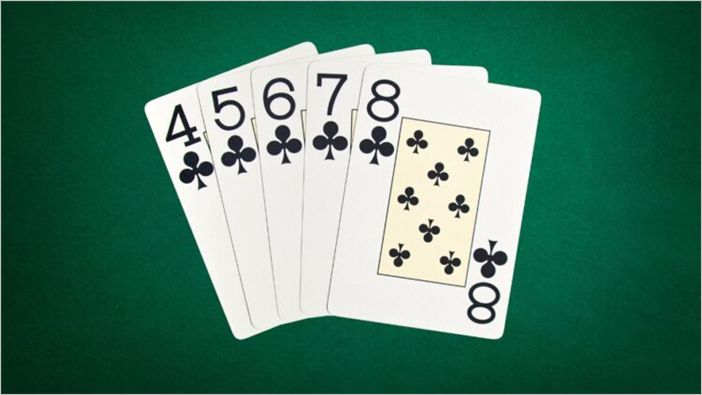
When you play poker, your goal is to create the best possible hand from a set of five cards. To determine the strength of your hand, you can refer to the standard rankings used in poker. Here are the different types of hands you can have:
1. Royal Flush: This is the highest-ranking hand in poker. It consists of the Ace, King, Queen, Jack, and 10 of the same suit.
2. Straight Flush: This is a straight of five cards in sequential order, all of the same suit. For example, you might have the Jack, 10, 9, 8, and 7 of hearts.
3. Four of a Kind: This hand consists of four cards of the same value, along with an additional random card. For instance, you could have four 8s and a Jack.
4. Full House: A full house comprises three cards of one value and two cards of another value. For example, you might have three Jacks and two 2s.
5. Flush: A flush is made up of five cards of the same suit, regardless of their value.
6. Straight: This hand consists of five cards of consecutive value, but they can be of different suits.
By understanding these rankings, you can better assess the strength of your hand and make more informed decisions during a poker game.
Here are some poker hand rankings:
- Three of a Kind: When you have three cards of the same value and two random cards. For example, 5, 5, 5, 3, J.
- Two Pair: When you have two pairs of cards with equal value and one random card. For example, 8, 8, 4, 4, J.
- Pair: When you have one pair of cards with equal value and three random cards. For example, Q, Q, 8, 5, 3.
- High Card: When your cards don’t interact with each other, so you play the highest value card.
Sometimes, two poker hands can be identical because the suits don’t have any rank in poker. When this happens, the players who are tied split the pot. However, if the two winning hands have the same pair or the same two pairs, the remaining card with the highest value wins.
Let me show you an example of how poker hands are ranked. Picture this: Player 1 has two 10s, a 9, a 4, and a 2, while Player 2 has two 10s, an 8, a 7, and a 6. In this scenario, Player 1 wins because their hand is slightly better. Now, let’s say Player 1 has a pair of Kings, a pair of Queens, and a 10, while Player 2 has a pair of Kings, a pair of Queens, and a 3. Once again, Player 1 comes out on top. If you want to dive deeper into the rankings for different poker games, we have a comprehensive guide that covers it all.
Now, let’s talk about dealing cards in poker. Before the game officially begins, someone needs to shuffle and deal the cards. You can take turns being the dealer, passing the responsibility to the next person for the next game. To shuffle and deal properly, just follow these simple steps and rules:
1. First, make sure you have a complete deck of 52 cards.
2. Give the cards a good mix by spreading them out on the table and shuffling them around.
3. Straighten up the deck so that all the cards are neatly aligned.
BETTING IN POKER
When it comes to playing poker, knowing how to properly shuffle and deal the cards is crucial. Let me walk you through the steps:
- First, split the deck into two and merge the cards together by riffling them, placing one card on top of the other.
- Next, cut the deck by taking at least four cards from the top.
- Repeat the previous two steps several times until the deck is thoroughly shuffled.
- It’s important to keep the bottom card hidden from view at all times.
- If there are any concerns about the shuffle or cut, address them before the game officially starts!
- Starting from the left of the dealer, deal the cards clockwise around the table, one by one.
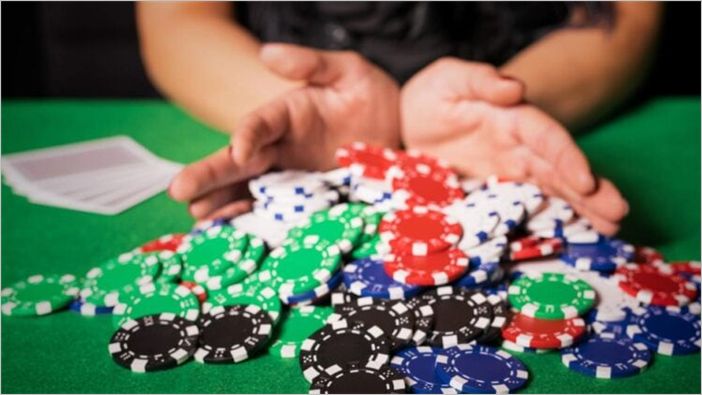
In poker, betting is an essential part of the game. As we play, there are moments when we have the chance to bet on our hands. It’s crucial to understand different betting styles in poker, so let’s dig in and gain some knowledge about how betting works in a poker game.
The Basics: Blinds and Antes
Blinds are at the core of many poker games, like Texas Hold’em. But what exactly are small blinds and big blinds?
In games with blinds, the player on the dealer’s immediate left must pay the small blind. Then, the player to the left of the small blind pays the big blind, which is usually twice the amount of the small blind.
When playing a cash game, it’s pretty simple to know the blinds. All you have to do is check the game listing. Let’s say we have a $10/$20 cash game. That means the small blind is $10 and the big blind is $20.
In most poker games, the smallest bet you can make during any betting round is the same as the big blind. So, in our example, the minimum bet in the game would be $20.
Now, let’s talk about Texas Hold’em and Omaha poker. In these games, the player to the left of the big blind is the one who starts the preflop betting round. They can either call the amount of the big blind, raise the bet, or fold their hand. Don’t worry, we’ll dive deeper into this later!
On the flip side, all players at the table must contribute something called an “ante.” Let’s say we have a $10/$20 cash game with a $5 ante. That means every player has to put in $5 into the pot before the hand even begins.
CALL, RAISE, AND FOLD
Now that the blinds and antes (if applicable) have been placed, it’s time for some betting action! When playing poker, it’s important to know what your options are when it’s your turn to bet. Here are the three choices you have:
- Call: If another player has bet before you, you can call by betting the same amount as them. Let’s say someone bets $5 and then another player raises the bet to $10. If it’s your turn, you can call by adding $5 to the pot, matching the $10 bet.
- Raise: Instead of just calling, you have the option to raise the bet. First, you need to match the current bet amount and then add even more money to increase the wager. This forces other players to match your new bet amount if they want to stay in the game.
- Fold: If you don’t feel confident in your hand, you can choose to fold. This means you give up your cards and are out of the current round of betting. You won’t have to bet any money, but you also can’t win the pot.
These are the choices you’ll have when it’s your turn to bet in a game of poker. Remember, you want to make the best decision based on the strength of your hand and the actions of the other players. Good luck!
The betting rounds will continue until all players have either called, folded, or raised. If a player raises and everyone else at the table calls that raise, and no one else raises, then the betting round comes to an end.
Betting Limits
Before starting a hand, it’s important to establish the betting limits. Throughout the game, these limits can be altered if all the players agree.
Here are three popular limit systems:
No Limit
In a no limit poker game, you have the freedom to bet all of your chips at any time during the hand.
Let me give you an example of how going all-in works in a game of poker. Imagine we’re playing a no-limit game, where all players start with $100 in chips. In this game, you can bet any amount of chips you have, even going all-in and putting all $100 on the line. When someone goes all-in, it means they’re betting everything they have.
But there’s a catch – you can’t add more chips to your bet once you’ve gone all-in. So if you started with $100 and went all-in, you can’t later add another $100 when you know you have a strong hand. The maximum amount you can bet is the number of chips you have when the hand starts.
Poker Rules for “All In”
Now, let’s talk about some rules to keep in mind when you decide to go all-in in a poker hand. These rules help ensure fair play and keep the game balanced.
The first rule is that if a player is all-in, you can’t call or bet more money than what you have on the table. In other words, you can’t put more money at stake than you currently have in front of you. This rule makes sure that everyone has a fair chance of winning based on their available chips.
The second rule is that you can’t win more than what you have on the table. This means that even if you have a winning hand, you can only receive the amount of chips that were in the pot when you went all-in. It’s important to remember this rule to avoid any misunderstandings or conflicts during the game.
By following these rules, the game stays fair and everyone has an equal opportunity to win. Now that you understand the concept of going all-in and the rules that come with it, you’ll be better prepared for your next poker game. Good luck!
Let’s imagine a scenario to help us understand how calling works in poker. Currently, there’s $1,000 in the pot. The previous player goes all in for $100, but I only have $50. Can I still call? Yes! Even though I can’t match the full amount, I can still call. If I happen to win, I get the $1,000 in the pot, my $50 back, and an additional $50, which is the amount I was able to match. In total, I would win $1,100. The player who went all in for $100 also gets $50 back since that’s the amount I couldn’t match.
Now, what about a side pot?
Let me explain. Sometimes, things get a bit more complicated. For example, what happens if one player is all in and has no more chips, but there are still two or more players actively playing? This is when a side pot comes into play.
Let me explain how side pots work in a poker game. Imagine a scenario where Player 1 goes all in for $100, while the two other players have $200 each.
Both players can call the $100, adding it to the main pot, which now becomes $300. However, since the other two players still have chips, they can continue to put more chips in a side pot.
It’s important to note that only these two players can win the side pot, not Player 1.
FIXED LIMIT
In a fixed limit poker game, there are rules in place that prevent any player from betting or raising more than a predetermined number of chips. This limit may vary throughout the game.
For example, in draw poker, the limit might be set at 5 chips before the draw, but then increase to 10 chips after the draw. Similarly, in stud poker, the limit may be 5 chips, but then increase to 10 chips for the final betting round.
POT LIMIT
Let’s talk about pot limit poker games. In these games, there’s a rule that limits the amount you can bet or raise to the number of chips in the pot. So, you can only bet between the minimum amount and the total amount of money in the pot at that moment. Sound complicated? Let me explain it more clearly.
Imagine you’re playing a $5-$10 hold’em poker game. After the flop, there’s a total of $40 in the pot. The first player to act on the betting round can bet anywhere between $10 (the minimum bet) and $40 (the amount in the pot). Let’s say this player decides to bet $20. Now, the next players can either call (match the $20 bet), raise (increase the bet), or fold (give up their hand).
Now, let’s say the next player decides to raise. The maximum amount they can raise is $60, which is the current amount in the pot ($40) plus the first player’s bet ($20). So, the next player can choose to raise up to $60, making their total bet $80 (including the first player’s $20 bet).
Let’s Compare Draw and Stud Poker Rules
Did you know that there are two main types of poker games? They have slightly different rules but are equally exciting to play. Let me explain.
The first type is called draw poker. In this game, the players are dealt a complete hand of cards face-down. Then, in a series of betting rounds, players have the opportunity to trade some or all of their cards for new ones from the deck. The goal is to create the best possible hand by the end of the last round of betting. The player with the highest-ranking hand at the showdown wins the pot.
Now, let’s talk about stud poker. This game is a bit different. Instead of being dealt a complete hand upfront, players receive their cards one at a time, with a round of betting in between each card. The first card dealt is face-down, known as the hole card. Players make strategic decisions about their bets and their opponents’ cards as their hands grow. The player who bets the most wins if everyone else folds. However, at the showdown, the player with the highest hand takes home the pot.
In draw poker, you start with five cards. Two of them are face-down, which are called hole cards. After the cards are dealt, we start betting. We keep betting until everyone is “square” with the pot. This means that if someone raises the bet, you have to at least match it or raise it even higher. If you don’t want to match the bet, you can choose to fold and give up your hand. After the first round of betting, you can trade in up to three cards for new ones. Then we do more betting. Once the pot is “square” again, everyone shows their cards, and the player with the best hand wins the pot.
END OF GAME
There are two ways a poker game can end:
- Texas Hold’em: In this game, each player tries to create the best possible poker hand using their two initial cards and the five community cards.
- Omaha: Similar to Texas Hold’em, but here players must use two of their four private cards along with three of the five community cards to form the highest-ranking poker hand.
- Pineapple: This game is similar to Texas Hold’em, but with a twist. Instead of receiving two hole cards, players get three, but after the flop, they must discard one of them.
- Lowball: In this version of poker, the goal is to have the lowest hand.
- 2-7 Triple Draw: This lowball variant gives players five private cards and three chances to trade some or all of them for the lowest possible hand.
- 5-Card Draw: You can exchange some or all of your five hole cards to try and make the best hand.
- 7-Card Stud: With this variant, you receive seven cards – three face-down and four face-up – and aim to create the best five-card hand.
- Chinese: In Chinese poker, you get 13 cards and must organize them into three poker hands – two five-card hands and one three-card hand.
- Horse: This mixed game includes different poker variations like Hold’em, Omaha, Razz, Seven Card Stud, and Eight or Better.
- Poker Dice: It’s a dice game where you roll five dice and try to make the best poker hand.
- When your opponent looks nervous, it could be a sign that they are trying to hide something and are unsure of their hand.
- If your opponent is looking at something else in the room, they might be trying to divert their attention away from the game, indicating that they have a weak hand and are not confident.
When it comes to poker, there are some basic rules that you should know. Understanding these rules will help you navigate the game with ease and have a better chance at winning. So, let’s get started!
First, let me explain how a typical poker game works. All players are dealt a certain number of cards, and they place bets based on the value of their cards. The goal is to have the highest-ranking hand at the end of the game.
As the game progresses, players have the opportunity to fold and drop out of the game, or continue betting to stay in. This continues until there is only one player left or until all players show their hands at the showdown.
The showdown is the most critical moment in a poker game. It occurs when there are at least two players still in the game after all the betting rounds. This is when all players remaining reveal their hands, and the player with the best hand is declared the winner.
Different Types of Poker Games
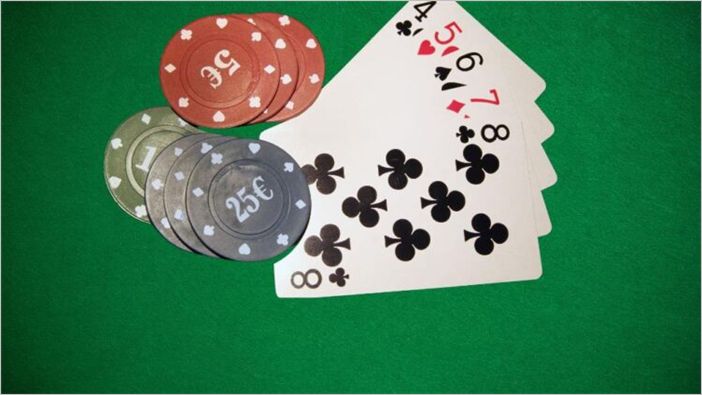
Now that you know the basics, picking up different poker game rules will be a breeze. There are many types of poker games played all over the world, but they all follow the same basic structure. Let me introduce you to a few of them:
I find it fascinating how many different versions of poker there are. It’s crazy to think how one game can have so many variations, each with its own rules and strategies. Let me tell you about a few of them that I find interesting.
First up is Lowball. This is a unique poker game where the objective is to have the lowest hand. It’s the complete opposite of traditional poker, where the highest hand wins. In Lowball, you want to avoid getting strong cards and aim for the weakest ones instead.
Next is 2-7 Triple Draw. In this lowball variant, each player is dealt five private cards, and they have three opportunities to exchange some or all of their cards in order to achieve the lowest possible hand. It requires a different kind of strategy, as you have to carefully consider which cards to discard and which ones to keep.
Another popular variation is 5-Card Draw. This is a simple form of poker where each player is dealt five cards, and they have the option to exchange some or all of their cards for new ones. The goal is to make the best hand possible using the cards you have.
7-Card Stud is another interesting variant. In this game, players receive a total of seven cards – three face-down and four face-up. They use these cards to create the best five-card hand. It’s a game that requires careful observation and strategic thinking, as you have to analyze the exposed cards and make educated guesses about the hidden ones.
Chinese poker is a unique and challenging variation. In this game, players receive 13 cards and must organize them into three separate poker hands – two five-card hands and one three-card hand. The goal is to create three strong hands that can beat your opponents’ hands. It’s a game that requires both luck and skill, as you have to make the best use of the cards you’re dealt.
Lastly, we have Horse, which stands for Hold’em, Omaha, Razz, Seven Card Stud, and Eight or Better. It’s a mixed game that combines several different poker variations. In Horse, you play a rotation of these games, which adds an extra layer of complexity and variety to the gameplay.
So as you can see, there are many different variations of poker to explore. Each one offers a unique experience and challenges your skills in different ways. Whether you prefer Lowball, Chinese, or any other variant, there’s something out there for everyone. Keep exploring and have fun discovering the world of poker!
POKER STRATEGY
Now that you know the basic poker rules, let’s talk strategy. Here are some top poker strategies to help you win!
BLUFFING
If you know poker, you know about bluffing. But when should you bluff?
Bluffing is when you pretend to have a strong hand even if your hand is weak. The goal is to make other players fold, even if they have a better hand than you.
When it comes to playing poker, there are a few strategies that can greatly improve your chances of winning. One of them is semi-bluffing, which is a tactic that involves bluffing to some extent, while still having a chance of improving your hand if your bluff is called.
SLOW-PLAYING
Another strategy you can use is slow-playing, which is basically the opposite of bluffing. If you have a strong hand, instead of acting confident, you check or make small bets to encourage players with weaker hands to raise. This way, you can slowly increase the pot while making your opponents believe they have a chance of winning.
PAY ATTENTION TO YOUR OPPONENTS
One of the most important strategies in poker is paying attention to your opponents. By observing their behavior and actions, you may be able to spot signs that they are bluffing. Some common tells include looking nervous or focusing on something else in the room.
The Art of Poker: Secrets to Winning Big
When it comes to the thrilling world of poker, it’s not just about the cards you hold in your hand. There are hidden signals, known as tells, that can give you valuable insight into your opponents’ strategies. These subtle cues can make a world of difference between folding in defeat and raking in the pot. Today, I’ll share a few key tells to look out for, helping you elevate your game and secure those big wins.
Reading the Room: Mastering the Tells
One of the most important skills in poker is understanding your opponents. As you play more and more games, you’ll develop a familiarity that allows you to decipher their tells. These tells can come in various forms, such as tapping the table or twitching. They are signs of nervousness or excitement that can reveal the strength of their hand. By paying attention to these subtle gestures, you can gain an advantage and increase your chances of winning the pot.
It is important to remember that tells are not foolproof. They can be deceiving at times, making the game a double-edged sword of perplexity and exhilaration. Skilled players can use their tells to manipulate and confuse you. Therefore, it’s vital to be aware of this possibility and take it into account as you make your decisions.
Additionally, don’t forget the power of your own tells. Just as you can observe your opponents, they can also observe you. Be mindful of your own gestures and expressions, as they may inadvertently reveal the strength or weakness of your hand to others.
FAQ
Is Poker Skill or Luck?
Many people wonder if poker is purely a game of luck or skill. The truth is, it’s a little bit of both. Luck certainly plays a significant role in determining the outcome of individual hands. However, in the long run, skill is the primary factor that separates the winners from the losers. Successful poker players are able to consistently make strategic decisions and use their knowledge to outsmart their opponents.
Is Poker Gambling?
Poker is often associated with gambling, but it’s important to recognize that it falls into a unique category. While it does involve a degree of gambling, it also requires skill and strategy to succeed. Players must carefully analyze the game and make calculated bets based on their hand’s potential and their opponents’ behaviors. So, while luck is a factor, skill and decision-making are integral components of the game.
Have You Heard of a Straddle in Poker?
So, there’s this thing called a straddle in poker. It’s like a secret weapon you can use to spice things up before the dealer even starts dealing the cards. With a straddle, you get to really amp up the stakes by doubling them. Normally, a straddle bet is twice the amount of the big blind.
Can You Play Poker Without Chips?
Guess what? You don’t even need chips to play poker! It’s true! You can make do with anything you can count. Even Monopoly money works just fine. Or, if you’re feeling a little adventurous, you can play a game of Strip Poker and bet your clothes instead. Talk about taking things up a notch!
Let me tell you a bit about myself. I’m a digital nomad and a traveler who’s always on the move. And guess what? I’m a huge board game enthusiast! Words games like Scrabble, Boggle, and Wordle are my absolute favorites. There’s just something about playing with words that gets me all excited!