
Welcome to the world of Nine Wicket Croquet!
Imagine a fun outdoor game where you use mallets to hit plastic balls through wickets, or hoops. That’s exactly what Nine Wicket Croquet is all about! It’s like a combination of pall-mall, golf, and trucco, but with its own unique twist.
The origins of this game come from a French game called paille-maille or pall-mall. People have different opinions about how it all started, but one thing’s for sure – it’s been around for a long time and has brought joy and excitement to countless people.
Now, let me show you how to play Nine Wicket Croquet, also known as Backyard Croquet. It’s an easy game to set up and it’s perfect for playing in your own backyard.
Here’s what you need to do to get started:
In order to play Backyard Croquet, you don’t need a fancy lawn. In fact, short grass is the best for the game. A standard croquet court is usually 100 feet long and 50 feet wide, but if your lawn is smaller, you can adjust the spacing between the wickets accordingly. To make things easier, you can use chalk or spray paint to mark the measurements before setting up the wickets.
Wickets
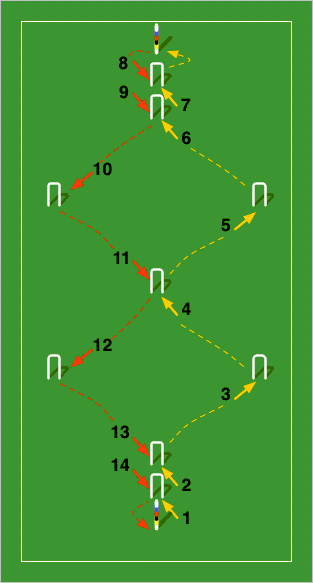
The lawn should have two stakes and nine wickets arranged in a double-diamond pattern. Make sure the wickets have a standardized width and are firmly placed in the grass. Remember, if you’re playing on a smaller field, keep the layout proportional.
Balls and Mallets
When playing games with two or four players, we use a total of four balls. These balls come in different colors – black, blue, red, and yellow. The first player or team uses the black and blue balls, while the second player or team uses the red and yellow balls. In a four-player game, each player has their own ball. If we have six players, the first team plays with blue, black, and green balls, while the second team plays with red, yellow, and orange balls.
Each player also receives their own mallet, which must be the same length unless all players agree on a different measurement. The length of the mallet head is an important measurement in the game. By default, players are only allowed to hit the ball with the striking side of the mallet. However, players can choose to change this rule and allow side-shots if they want.
When playing Croquet, players often use colored clips to keep track of the next wicket they need to shoot through. Once their ball passes through a wicket, they retrieve their clip and mark the next one. It’s a simple and effective way to stay organized.
The Basics of Croquet
The main objective of Croquet is to move your ball across the course, following the correct direction through each wicket. The first player or team to earn 14 wicket points and 2 stake points is declared the winner. In a timed game, the player or team with the highest number of points when the time runs out claims victory.
How to Play
When playing this game, we start at the halfway point between wicket one and the finishing stake. First, we send out the blue ball, and then the red, black, and yellow balls follow. If we’re playing with six people, the game starts the same way, but ends with the green and orange balls. You can tell the order of play by looking at the stake’s colors.
If there are only two players, we can make the game go faster by using just one ball per player. The winner is the first one to complete the entire course.
Playing out of Turn
Did you know that in croquet, you can take a shot out of turn without getting penalized? If you accidentally hit a ball that isn’t yours on your turn, you can just put it back where it was. Even if your swing doesn’t connect with the ball, it still counts as a shot and your turn is over unless you have a bonus shot.
Now, about those bonus shots. They’re like little rewards you can earn in two different ways. If you score a wicket or hit a turning stake, you get one bonus shot. But if you hit another ball with your own ball, that’s called a “roquet” and you earn two bonus shots. The maximum number of bonus shots you can get is two. When it’s time to take your first bonus shot after hitting another ball, you have four choices:
- When playing croquet, I can hit the ball from a mallet-head distance or closer to where it was previously hit. We call this “taking a mallet-head.”
- If the balls are still next to each other, I can use my foot or hand to hit the opponent’s ball out while keeping it steady. This is what we call a “foot shot” or a “hand shot.”
- Similar to the previous shot, but this time I can’t use my hand or foot. I have to hit the ball with the mallet-head only. This is known as a “croquet shot.”
- I can hit the ball from where the striker ball stopped after hitting another ball (a “roquet”).
Now, here’s the really cool part. If I earn a bonus shot, I get to take another turn. This is called a “continuation shot.” You play it just like a regular shot.
However, there’s a special rule when it comes to earning bonus shots. If I manage to score 2 wickets with a single shot or a wicket and a stake, I earn 2 bonus shots.
Now, if you find yourself without any bonus hits or “dead” on a ball, don’t worry. You just have to focus on scoring a wicket by taking single shots during your turns.
Scoring: A Game of Skill and Precision
When playing the game of croquet, achieving points is not as simple as it may seem. The key to earning points lies in ensuring that the balls pass through the wicket entirely or hit the stake while moving in the correct direction. It’s a delicate balance of skill and precision.
Passing through a wicket or successfully hitting a stake results in earning a single point. However, it’s essential to note that if the ball rolls back after passing through the wicket, no points are awarded. This adds an extra layer of challenge to the game, elevating the excitement and intensity.
Plays made out of order, although not penalized, can disrupt the flow of the game and require careful strategizing. Each move should be well thought out to maximize your chances of scoring points and outsmarting your opponents.
Creating Optimal Game Boundaries
Setting up the boundaries of the croquet course is crucial for an enjoyable and fair game. To establish the boundaries, you can use chalk or other marking tools to demarcate the area. This helps ensure that the game is played within the designated space and allows for strategic maneuvering.
If a ball is found to be at least halfway across the boundary line, it must be placed inside the course. It should be positioned a mallet-head length within the boundary line and perpendicular to it. This rule ensures that the ball remains in play and rewards players for their accuracy and finesse.
In addition, if a ball is less than a mallet-head length away from the boundary line, it should also be moved inside the boundary. It should be positioned a firm mallet-head length away to maintain fairness and provide players with a fair chance to navigate the course effectively.
Rover Balls: Adding Complexity to the Game
Within the game of croquet, rover balls introduce an interesting twist and challenge. Rover balls are any balls that have passed through all the wickets in order, earning an additional opportunity to score points from the stakes. They become powerful assets in the game, demanding careful consideration and strategy.
Players must take advantage of each rover ball to gain an upper hand. By utilizing these balls strategically, you can multiply your scoring potential and gain a significant advantage over your opponents. It’s a test of foresight and adaptability to make the most out of the opportunities presented in the game.
The game of croquet is an exhilarating journey of skill, precision, and strategy. By understanding the intricacies of scoring, creating optimal boundaries, and leveraging rover balls, you can elevate your gameplay and increase your chances of outwitting your opponents. So, grab your mallet and get ready to embark on an adventure unlike any other!