
Contents
Get Ready to Master the Five Crowns Game!
Whether you’re a seasoned card player or just getting started, Five Crowns offers a delightful twist on traditional card games. This popular game combines the classic appeal of rummy with a thrilling twist that will keep you on your toes. Get ready to dive in, because once you start playing, you won’t want to stop!
How to Play
The objective of Five Crowns is to be the player with the lowest score after completing all 11 rounds. Each round is centered around forming sets and runs with the cards in your hand. A run is three or more consecutive cards of the same suit, while a set is three or more cards of the same rank. Throughout the game, the number of cards dealt to each player increases, starting with three cards in the first round and rising by one card in each subsequent round.
The game begins with a wild card determined by the number of cards in each player’s hand. For example, during the first round, threes are wild, while in the second round, it’s the fours. This rotation continues until the last round, where Kings reign as the wild card. The wild card adds an element of surprise and strategy to the game, as it can help you form sets and runs more easily.
Each player takes turns drawing a card or picking up the discard pile. To end their turn, they must discard one card. If a player forms all their cards into sets and runs, they can go out by discarding their last card. However, they must have a valid hand in order to go out; otherwise, they must continue drawing and discarding until they can form the required sets and runs.
After a player goes out, the round continues until every player has had a chance to complete their hand. The scoring then begins, with each player counting the remaining cards in their hand. Numbered cards count as their face value, while face cards and the wild card are worth 10 points each. The objective is to minimize your score by forming sets and runs and getting rid of high-value cards.
Once the scoring is complete, the next round begins, and the wild card changes. This pattern continues until the end of the 11th round, at which point the player with the lowest cumulative score is declared the winner!
Strategy Tips
To master Five Crowns, you’ll need a blend of strategic thinking and adaptability. Here are a few tips to up your game:
- Keep an eye on the wild card for each round, as it can greatly influence your game plan. Adjust your strategy accordingly.
- Try to form sets and runs early in the round, as this will give you more flexibility as rounds progress and the number of cards dealt increases.
- Keep track of the cards your opponents pick up and discard. This information will help you infer what sets and runs they may be working on, allowing you to adjust your own strategy accordingly.
- Don’t be afraid to pick up from the discard pile, especially if the card discarded can help you form a set or run.
- Be mindful of the cards you discard. You don’t want to inadvertently give your opponents the card they need to complete a set or run.
Now that you have a solid grasp of the rules and some key strategies, it’s time to grab your deck of Five Crowns cards and gather your friends for an unforgettable gaming experience. Happy playing!
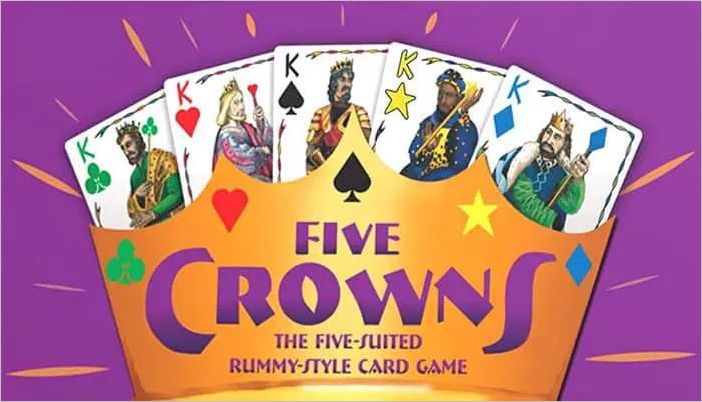
To win the game, I must have the lowest score at the end of the 11th round. This means I need to organize my cards into books or runs.
The game is played with two decks of cards, each deck containing 58 cards. In each deck, there are three Jokers and five suits: stars ♦️, hearts ♥️, clubs ♣️, spades ♠️, and diamonds ♦️.
Each suit has eleven cards: 3 through 10, Jack, Queen, and King.
There are also Wild Cards in the game.
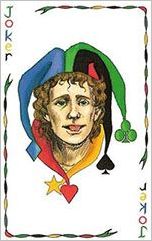
Did you know that jokers can be wild cards? They add an element of unpredictability to the game. But that’s not all – there are also rotating wild cards that change with each round. The specific cards that become wild depend on the number of cards dealt in that round.
Let me break it down for you. When 3 cards are dealt, the 3s become wild. When 4 cards are dealt, the 4s become wild. This pattern continues until the final round, when the Kings take on that wild role. It keeps things exciting, doesn’t it?
The Power of Books
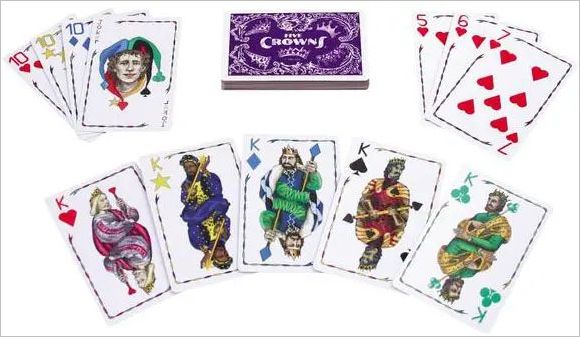
Now, let’s talk about books. No, not the ones you read for enjoyment, but rather a combination of cards in the game. A book is formed when you have three or more cards of the same value, regardless of their suits. So, for example, if you have three 7s or four Queens in your hand, you’ve got yourself a book.

Have you ever played a card game where any card in a book can be replaced by a wild card? It’s like having a secret weapon up your sleeve! Let me show you an example:

I want to tell you a fascinating fact about playing cards. Did you know that you can have unlimited wild cards in a book, and they can even be next to each other? That’s right! There’s no limit to the number of wild cards you can use, and they can be grouped together.
What are runs?
Now, let’s talk about runs. A run is when you have three or more cards of the same suit in consecutive order. Let me give you an example:

So here’s the deal – if you’ve got wild cards, you can swap ’em for any card in a run. It’s like magic! Let me show you an example:

Let me tell you something cool about playing cards. Did you know that when you’re trying to make a run, you can use as many wild cards as you want? And guess what? You can even put them right next to each other!
Cards Deal
- Mix both decks of cards together.
- In the beginning, I will deal 3 cards, one by one, to each player in a clockwise direction. Every following round, the number of cards dealt will increase by one. For example, in the second round, I will deal 4 cards, in the third round, 5 cards, and so on, until the last round when every player will receive 13 cards.
- Put the remaining cards in the middle of the table to create the draw pile. Flip over the top card to start the discard pile.
Playing the Game
Now that we have dealt the cards, let’s talk about how to play the game.
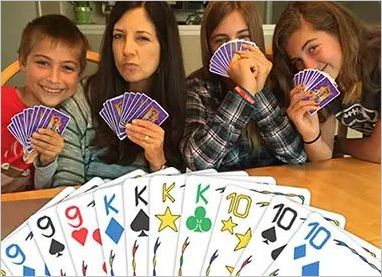
- First, it’s my turn. I start because I’m sitting to the left of the dealer. Then it’s your turn, and we keep going around the table in a clockwise direction.
- When it’s your turn, you have two options. You can either draw a card from the draw pile, or you can pick up the top card from the discard pile. Just remember, you can only take the top card from the discard pile.
- Now, you need to keep all of the books and runs in your hand until you’re ready to go out. Make sure to hold onto them tightly!
- Finally, once you’ve made your move, you’ll need to discard one card. This means that you put one card face-up on the discard pile. And with that, your turn is complete.
Alright, listen up! Here’s the deal: when it’s your turn in the card game, you gotta start by playing normally. You know the drill. But here’s the twist: instead of just discarding one card at the end, you gotta lay down all your cards on the table in books or runs. Oh, and don’t forget, you can only use the cards you were dealt to make those books and runs. Gotta have at least one card left to discard, though. And hey, that last discard can still be a playable card.
Now, once a player has gone out, everyone else gets one more turn. It’s your last chance to score some points, so make it count! Start your turn like usual, but this time, lay down any books and runs you can before you discard. And hey, all those unused cards? Yeah, they’re gonna count against you, so use ’em wisely. Oh, and just so we’re clear, you can’t play on someone else’s books and runs. That’s a no-no.
When it comes to scoring, we don’t care about the cards in your books and runs. Nope, just forget about ’em. All we care about is the score from your unused cards. That’s what we’re tallying up. So make sure the scorekeeper gets it right, alright?
There you have it, folks. That’s how you play this game. So get out there and show ’em what you got!
The card game has different card values. Each number card is worth its face value, with Jacks being worth 11 points, Queens being worth 12 points, Kings being worth 13 points, Jokers being worth 50 points, and the current wild cards being worth 20 points.
When playing the game, the player to the left of the dealer shuffles all the cards and deals the next round. As the game progresses, remember to increase the number of cards dealt by one card and keep track of the rotating wild cards. The game continues until the 11th round, where each player is dealt 13 cards and the Kings go wild.
After all the rounds are played, the player with the lowest score wins!
Here are some hints to help you during the game:
- Keep your options open. Even in the last round, you can come from behind and win. Remember, the game isn’t over until the Kings go wild!
- If you’re unsure which card is wild, count the number of cards you were dealt. That number is wild for that round.
Occasionally, in the game of Solitaire, there are some special situations that call for unique actions. Here are a few of these instances:
1. If you find yourself with a wild card that you can’t use, you have the option to discard it. This will save you some points but might benefit the next player.
2. When all the cards in the draw pile have been used up, you can shuffle the discard pile to replenish the draw pile.
3. In the event of a tie for the lowest score, there are two possibilities. You can either have multiple winners, or you can deal a 6-card tie-breaking round for only the players who are tied.
If you’re hosting a party, here’s a fun idea: combine two games of Solitaire and play with up to 14 people!
And now, let’s dive into the instructions for playing Solitaire.
The goal of Solitaire is to arrange all the cards in ascending order, from Ace to King, in four separate piles. These piles are called foundations, and they need to be built for each suit.
To start the game, shuffle the deck of cards and lay them out in seven columns, with the first column having one card, the second column having two cards, and so on. The remaining cards form a draw pile.
Next, you can begin moving cards around. You can only move the top card of each column, and you can place it on another column if it’s one rank lower and the opposite color. For example, a black 7 can be placed on a red 8.
If you have an empty column, you can move any King to that column to start a new pile.
If you can’t move any more cards, you can draw from the draw pile. Flip the top card over and see if you can use it on any of the columns. If not, continue flipping cards until you find a card that can be played.
Once all the cards are arranged in the foundations from Ace to King, you have successfully completed the game of Solitaire!
Enjoy the challenge and have fun!
Hey there! Let me explain how to play this game called Rummy. It’s a fun card game that you can play with friends or family.
To start, you need to create piles of cards. You can do this by closing out each pile with making books and/or runs before the draw pile runs out.
To set up the game, you shuffle all the cards together. Then you deal 11 piles. The first pile gets 3 cards, the second pile gets 4 cards, and so on, until the eleventh pile gets 13 cards. Make sure to arrange the piles face-up so you can see all the cards. The remaining cards make up your draw pile.
Wild Cards
Now, let’s talk about wild cards. Jokers are always wild, which means they can represent any card you want. The other wild cards are different for each pile. They are based on the number of cards in the pile. So, for example, if a pile has 3 cards, then all the 3s in that pile are wild.