
Contents
POLO SPORT RULES
Let’s dive right into the thrilling world of polo! Polo is an amazing sport that combines skill, strategy, and teamwork. I’m here to give you the lowdown on the basic rules of polo, so that you can understand the game and enjoy it to the fullest.
First things first, let’s talk about the teams. In polo, there are two teams, each consisting of four players. The players are always on horseback, which adds an extra level of excitement and challenge to the game.
Now, let’s get into the nitty-gritty of how the game is played. The aim of polo is to score goals by hitting a small ball with a long-handled mallet. The players swing the mallets with great skill and accuracy, trying to send the ball into the opposing team’s goal post.
But here’s the catch – polo is a fast-paced game, and the players have to do it all while riding their horses! They must maneuver their horses skillfully to chase the ball and defend their own goal. It’s a true test of coordination and athleticism.
To make the game fair, there are some important rules to follow. One of the key rules is the “right of way” rule. This rule ensures that players have a fair chance to hit the ball and score goals. It prevents any dangerous collisions between horses and players.
Another important rule is the “line of the ball” rule. This rule establishes an imaginary line that the ball creates as it moves forward. The players must follow this line and avoid crossing it to prevent any accidents or disruptions to the game.
Of course, safety is always a top priority in any sport, and polo is no exception. Players must wear protective helmets and boots to minimize the risk of injuries. They also have to follow strict guidelines to ensure the welfare of their horses.
So, there you have it – a brief introduction to the rules of polo. Remember, polo is a thrilling sport that requires skill, teamwork, and a love for horses. By following the rules and practicing regularly, you’ll be able to fully enjoy the exhilaration of this amazing sport. Get ready to saddle up and have some fun on the polo field!
Ever wondered where the iconic logo for Ralph Lauren Polo Shirts comes from? It’s actually inspired by the sport of polo! Polo is a unique team sport played on horseback, similar to field hockey but with athletes riding horses. The goal of polo is to use a long mallet to hit a ball through the opponent’s goalposts.
Polo is a fascinating sport that not many people know about. It’s not easily accessible like other sports because it requires a horse to play. Usually, only wealthy individuals who live in rural areas have the opportunity to play sports that involve horses. And when it comes to polo, it’s even more exclusive because players often need multiple horses to compete.
I want to talk about polo. You might know it as “the sport of kings,” and there’s a good reason for that. It started way back in the 200s BC in the Middle East, where the nobility would play this game. But polo wasn’t always just for the elite.
Believe it or not, polo actually had a practical purpose. It was used to train cavalry. As a result, the game slowly spread out from its Persian origins and became popular in many different places. In fact, during the Middle Ages, people were playing polo in Constantinople (which we now call Istanbul) and even as far away as Japan!
Now, even though polo was a hit in Asia, it hadn’t really made its way to Europe…until the British came along. When the British were colonizing India in the mid-1850s, they were introduced to polo by the locals in a place called Manipur. And the version of polo they learned there ended up becoming the foundation of the modern sport we know today.
SETUP
EQUIPMENT
- Horse: Polo players ride horses called “polo ponies,” although they are actually full-grown thoroughbreds. They are given this name because of their agility and speed, similar to ponies.
- Saddle: When playing polo, riders use a special leather saddle that provides extra grip. This gives them stability when leaning off the horse to hit the ball.
- Polo Stick: The polo stick, also known as a mallet, is made of bamboo or fiberglass. It is used to strike the ball during the game. The head of the stick, used to hit the ball, typically weighs about half a pound.
- Helmet: To protect themselves from falls and other players’ swings, polo players wear helmets. Interestingly, these helmets somewhat resemble large padded baseball hats.
Let’s talk about polo! It’s a thrilling sport that’s played on horseback. Polo requires skills, tactics, and a strong bond between you and your horse. In this game, you have to hit a small plastic ball using a long mallet. But before you start playing, there are a few things you need to know.
First, let’s talk about protection. It’s important to wear knee guards to protect your knees, shins, and feet from getting hit by another player’s mallet. Safety should always be a priority.
Now let’s talk about the ball. A polo ball is made of high-impact plastic. It measures 3 inches in diameter and weighs 4 ounces. It’s a small but powerful ball that requires focus and accuracy to hit.
When it comes to teams and positions, a polo team consists of four players in total. Each player has their own position and set of responsibilities. Let’s break it down:
Number 1 is also known as the attacking offensive player. They are the team’s primary scorer and are responsible for driving the ball up the field. Usually, this position is given to a rookie or the team’s least experienced player. Number 1 is also in charge of defending the opponent’s least offensive player, number 4.
Number 2 is the team’s midfielder. They play a crucial role in both attacking and defending. Number 2 needs to be skilled in controlling the ball and making accurate passes to their teammates.
Number 3 is the team’s basic defense player. They need to be strong, agile, and skilled in intercepting their opponents’ movements. Number 3 is responsible for protecting their goal and defending against the opponent’s number 1 player.
Number 4 is the most defensive player on the team. They are responsible for marking the opponent’s number 1 player and preventing them from scoring. Number 4 needs to have excellent defensive skills and be able to anticipate their opponent’s moves.
So there you have it, the basics of polo. If you’re interested in this exciting sport, make sure to keep safety in mind, practice your skills, and work together with your teammates. With dedication and practice, you’ll be galloping across the field and hitting that ball like a pro. Good luck!
Understanding Different Soccer Positions
When it comes to soccer, there are various positions that players take on during a game. It’s crucial to know the roles and responsibilities of each position in order to excel on the field. Let’s take a closer look at three key positions: number 2, number 3, and number 4.
- Number 2: This position is all about supporting the team’s offensive strategy. As a number 2 player, my main goal is to either score points directly or assist my teammate in scoring. I am also responsible for guarding the opponent’s number 3, which can be quite challenging.
- Number 3: This position is often occupied by a team’s most skilled player. As a number 3 player, I act as the team’s captain, leading the way on the field. My role involves hitting long passes to the offense and being a strong presence on defense.
- Number 4: The number 4 position is all about defense. Although I don’t function as a goalie, I play a critical role as the primary defender. I am the team’s last line of defense, allowing the number 3 player to focus on facilitating the offense without worrying about conceding goals.
The Essence of Gameplay
Now that we understand the different positions, let’s delve into the gameplay itself. Soccer is a dynamic sport where strategy, teamwork, and skill all come together. The goal is to score more points than the opposing team within a specified time frame.
On the field, players must constantly move and communicate with one another. Passing, dribbling, and shooting are all essential skills. It’s important to be aware of your teammates’ positions and make quick decisions based on the flow of the game.
One key aspect of gameplay is understanding the flow of offense and defense. When your team is on offense, the focus is on scoring goals. This requires coordination, precision, and the ability to exploit the opposing team’s weaknesses.
On the other hand, when your team is on defense, the objective is to prevent the opposing team from scoring. This involves strong positioning, anticipation, and effective communication with your teammates.
As a player, it’s crucial to be versatile and adaptable. The ability to switch between offense and defense seamlessly can make a significant impact on the outcome of the game.
Overall, soccer is a complex and exhilarating sport that requires skill, strategy, and teamwork. By understanding the different positions and embracing the dynamic nature of the game, you can become a valuable asset to your team and experience the joy of playing soccer to its fullest.
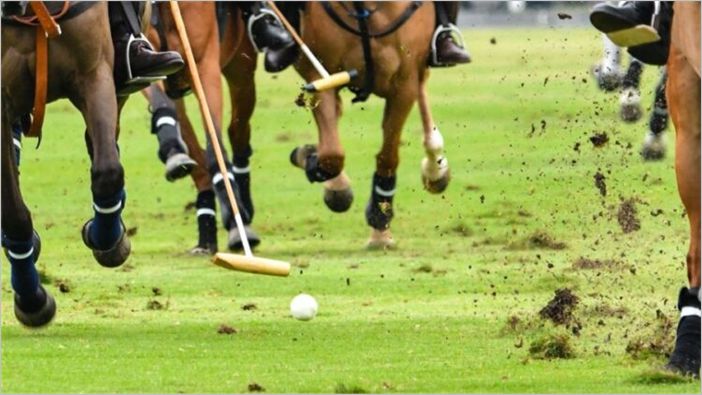
When it comes to a polo match, it’s quite the spectacle! The game takes place on a sprawling grass field, measuring a whopping 300 yards long and 160 yards wide. Can you imagine that? Picture this: eight players gathered around a small ball, fiercely whacking it with their bamboo mallets. They skillfully maneuver it up and down the field, trying to send it soaring through their opponent’s goalposts.
Ah, those goalposts! They’re about eight yards apart, like towering sentinels guarding the way. And when a player successfully sends the ball sailing through those posts, a celebration ensues. The teams switch sides, and the game rolls on.
But how long does this breathtaking action last? Well, my friend, it happens within a time limit called a “chukker.” Each chukker spans 7 intense minutes of play. And guess what? When those 7 minutes are up, the players have an extra 30 seconds to wrap up any unfinished business. How’s that for excitement?
Now here’s an interesting tidbit: a match typically consists of not just one, not two, but somewhere between four and six chukkers. It’s a thrilling back-and-forth between the teams, with each chukker adding to the suspense and thrill.
SCORING
Did you know that in polo, players score a point each time they successfully hit the ball through the opponent’s goalposts? It’s a fast-paced and thrilling game where teams are constantly switching sides of the field to account for any advantages or disadvantages caused by the sun or wind.
Switching Horses
The success of a polo player heavily relies on their horse, accounting for about 75% of their performance. If a rider’s horse doesn’t respond well to their cues, it can greatly hinder their ability to contribute to the team. That’s why polo can be an expensive sport – players need multiple horses to compete since a single horse would become too tired to play a full match. In fact, players are even allowed to change horses between or during chukkers, which are the periods of play.
To compete in polo, each player must have at least two horses. However, at higher levels of play, it’s not uncommon for competitors to have five or more horses in their stable.
Polo Handicaps: Leveling the Field
Have you ever wondered how polo players of different skill levels compete on a fair playing field? Well, that’s where handicaps come into play. In polo, a handicap is like a rating system that allows players of varying abilities to face off against each other. It’s sort of like having a secret superpower!
Every country has its own unique scale for handicaps, but most of them rate players anywhere between -2 and 10. The higher the handicap score, the more skilled the player is considered to be. A perfect score of 10 is a remarkable achievement, reserved for the absolute best of the best.
Here’s how it works: before a match starts, the handicap scores of all players on a team are added up and compared with their opponents’. The team with the lower handicap score gets a head start. The difference between the two teams’ handicap scores determines the number of goals the team with the lower handicap starts the game with. It’s like they have a head start to level out the playing field.
When you reach the highest levels of polo, most players have exceptionally high handicap scores. It’s a testament to their incredible skills and dedication to the sport.
Designed for Right-Handers
Did you know that in polo, players have to use their right hand to wield the mallet? It might sound strange, but there’s a reason behind it – safety! If players were allowed to use their left hand, there would be a high chance of collisions on the field.
THE RULES

Did you know that polo is a sport that involves players on big horses getting really close to each other? Because of this, there are rules in place to make sure everyone stays safe:
- If you touch the ball last, you get the right of way. No other players can get in your way.
- You can’t gallop towards an opponent with the ball to scare them or make them change direction.
- Riding outside the field or doing anything that could harm the umpires is not allowed.
- You can’t hit another player’s horse in a way that could make the horse fall.
If any of these fouls occur, the game is temporarily halted by the umpire blowing a whistle. Depending on the seriousness of the foul, the opposing team may be given a free hit at the goal. The distance from which the free hit is taken can vary, ranging from 30 to 60 yards.
In more severe cases, the affected team may be awarded a penalty goal. It is also possible for penalty shots to be given without any defenders in place.
LINE OF THE BALL
The concept of the line of the ball is a crucial rule in polo. It determines the right of way and the direction of play. This rule exists to prevent accidents and collisions between horses and riders, ensuring everyone’s safety.
Imagine this: You’re on a big field, riding a horse and holding a mallet. Your goal is to hit a ball towards a goal. But there’s a catch – there’s an imaginary line called the line of the ball. The player on this line has the right of way. No one can interfere with them. However, others can try to steal the line of the ball by pushing the player out of the way. This is called a “ride-off”. Another tactic is the “hook” technique, where a player uses their mallet to hook onto the opponent’s mallet or horse, disrupting their shot.
STRATEGY
When it comes to strategy, it’s a game-changer in polo. Teams often use pre-designed tactics called set plays to gain an advantage. For example, one popular play is positioning players strategically along the line of the ball to take control. It’s all about finding the best way to outwit your opponent and score goals.
- The line of the ball: Positioning players strategically along the line of the ball.
You’ve probably heard of polo, the thrilling sport played on horseback. But did you know there are different types of polo? Let me break it down for you.
First, we have the “ride-off.” In this move, a player on horseback challenges opponents and tries to push them away from the ball. It’s like a high-speed game of bumper cars, but with horses!
Next, we have “the hook.” In this move, a player uses their mallet to interfere with an opponent’s shot. It’s a strategic move that can throw off the other team’s rhythm.
These plays can give a team the advantage they need to score a goal. It’s all about outmaneuvering your opponents and seizing the moment.
But it’s not just about set plays. Polo players also need to be adaptable. The game can change in an instant, so teams must be able to adjust their strategy on the fly. Quick thinking and good communication are key.
So, you see, polo is not just a game of skill and strength. It’s a game of strategy and adaptability. If you’re up for the challenge, give it a try. You might just become a polo pro!
So, there are many different types of polo played all over the world, each with its own unique style. One type is arena polo – it’s like regular polo but played on a smaller field with boards to keep the ball in play. In arena polo, teams are made up of three players, and the game is played in four chukkers.
Then there’s snow polo, which is played on a snowy field. It’s a popular winter sport in places like Switzerland and Aspen, Colorado. In snow polo, players ride specially trained horses with shoes that help them grip the snow. The gameplay in snow polo is similar to arena polo, but the slower pace and softer ball make it easier for beginners to get the hang of.
That’s a Wrap!
When it comes to polo matches, the clock becomes the ultimate judge. As the final chukker period reaches its end, the countdown begins. And when that clock hits zero, the match is over. The team that has managed to score the most points emerges as the victorious one.
But what if our competitive spirits are still at an impasse when that clock stops ticking? In the case of a tie, the game takes on an extra twist. We enter a sudden death chukker period, where every second counts. The first team to score a goal in this final showdown becomes the triumphant champion.
Now let me tell you a little bit about myself. I’m someone who’s truly passionate about writing, and I find great joy in inspiring others to engage in playful activities, like games. My own journey into the world of fun and entertainment led me to run a pub crawl for three whole years. Every single day, I would organize drinking games for my guests, creating an atmosphere brimming with excitement and laughter.
But my connection to games doesn’t stop there. I come from a family that is absolutely infatuated with all sorts of games. From board games to video games, we’ve done it all. You could say that games are simply a part of who I am. They’re ingrained in my nature, and I can’t imagine life without them.
Of course, there’s more to me than just games. I also have a deep appreciation for travel and music. In fact, I love them so much that I’ve started personal blogs dedicated to both. Through my writing, I share my experiences and insights, hoping to inspire others to embark on their own adventures or discover new tunes that touch their souls.